
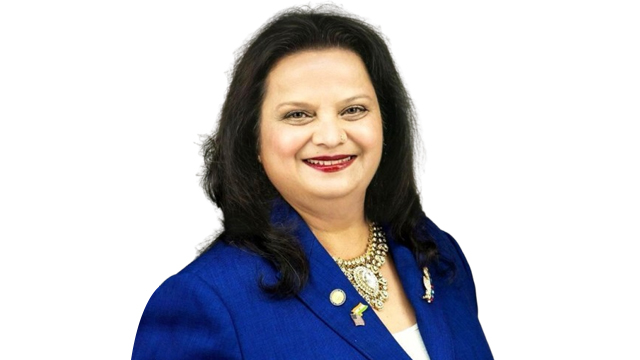
Intro: India’s economic story is entering a more consequential phase, where trade, investment and technology must translate into lasting national strength. Speaking to senior journalist Mahima Sharma, Fmr. National Advisor to the U.S. Sec. of Commerce for MBDA — Dr. Purnima Voria sees the India-U.S. relationship as capable of becoming much more than a commercial corridor. But what does that future actually require and where could India create its biggest gains before 2035? And why now? Read the exclusive at Indiastat on Socio-economic Voices this week.
MS: As India’s economic relationship with the U.S. becomes increasingly strategic, should India judge this partnership by rising trade alone—or by whether it creates better jobs, technology capabilities and domestic productive capacity over the next decade? Please reason out your choice of either or both.
Dr. Voria: India should judge this partnership by both results together. Trade remains an essential measure of economic integration. U.S.-India goods trade reached $149.4 billion in 2025. U.S. imports from India reached $103.8 billion. These figures confirm substantial and expanding commercial integration.
However, trade alone cannot measure development quality. Jobs, productivity, technology and production capacity matter equally. The 2025 TRUST initiative directly supports this broader framework. It covers semiconductors, artificial intelligence, quantum technology, biotechnology and space. It also promotes resilient critical-mineral supply chains. The initiative encourages investment supporting Indian manufacturing capacity.
Technology cooperation already includes research and industrial partnerships. Semiconductor cooperation also targets manufacturing, skills and research. These activities can strengthen India's position in global value chains. They also connect trade with longer-term productive capabilities.
The February 2026 framework further expands technology trade. It targets greater technology-product trade and cooperation. It also addresses investment, supply chains and digital trade.
Therefore, both measures should be assessed together. Trade shows whether economic integration is expanding. Jobs show whether benefits reach productive employment. Technology shows whether capabilities are improving. Domestic capacity shows whether India gains durable economic strength.
A decade-long assessment should track all four indicators. This provides a more complete economic performance picture overall.
MS: India is achieving record export numbers. How can this export growth become a mass employment engine amid the fear that the next decade may bring in a deeper problem of rising exports without enough labour-intensive jobs?
Dr. Voria: India’s export milestone is significant, but composition matters. Total exports reached $863.1 billion in FY2025-26.
The challenge requires deeper manufacturing integration. The Economic Survey supports deeper supply-chain participation. It identifies job-rich industrialisation potential.
Labour-intensive sectors should receive stronger export attention. These include textiles, apparel, leather, footwear and food-processing. Furniture, toys and sports goods also offer opportunities. These sectors can absorb workers with varied skills. They support wider regional employment. India’s textile sector demonstrates this employment potential clearly. It directly employs more than 45 million people. Nearly 80% capacity operates through MSME clusters. Textile exports also reached $37.75 billion during FY2025. This shows exports can support employment.
MSMEs are crucial for spreading export-linked jobs. They account for 48.58% of India’s exports. Better export finance helps smaller firms expand. Faster logistics improves competitiveness.
Trade agreements can expand markets for labour-intensive products. Recent negotiations support broader market access. Diversification reduces dependence upon individual markets. FTAs covered 40.5% of merchandise exports.
The priority should be export growth with employment depth. That requires skills, finance, infrastructure and supplier networks. Global companies can strengthen Indian manufacturing through local sourcing. Stronger domestic supply chains can multiply employment beyond factories. This approach can make exports a broader employment engine over time.
MS: India wants much more global capital but is simultaneously tightening scrutiny of Indian capital going abroad. So, how should policymakers balance capital controls, investor confidence and India’s ambition to become a global investment hub?
Dr. Voria: India is reviewing its model bilateral investment treaty to attract foreign capital, while net FDI reportedly fell to just $7.7 billion in FY2025–26. At the same time, RBI and SEBI have increased scrutiny of overseas investments by Indian firms and family offices.
Yet outward investment serves economic purposes. Indian companies need assets and markets. Controls should target risks, not normal expansion. Policy should distinguish productive capital from speculative flows. Clear rules can reduce uncertainty for investors. Stable rules matter as much as liberalisation.
India is reviewing its Model Bilateral Investment Treaty. The review seeks stronger investor confidence and safeguards. Rules require five years of domestic remedies. That requirement can delay international investment arbitration. Faster dispute resolution could improve investment attractiveness.
RBI is also reviewing foreign investment regulations. Its draft rules propose broader foreign-control criteria. The proposal includes a ten-percent voting-rights threshold. Such changes need clarity before implementation. Excessive compliance uncertainty can affect investment decisions.
India should maintain monitoring against financial abuse. That includes beneficial-ownership and regulatory-compliance checks. But legitimate overseas investment should remain predictable. Policymakers can achieve this through transparent, proportionate rules.
The objective should be two-way capital integration. Foreign investors need confidence entering Indian markets. Indian firms need confidence investing overseas. Both goals can coexist within credible regulation. India’s global investment ambition requires regulatory consistency.
MS: After years of celebrating startup numbers and valuations, how should India now measure entrepreneurial success to become globally competitive? How can a smaller but stronger startup ecosystem be better for India’s next decade?
Dr. Voria: Startup funding has become more selective in 2026. Reports are pointing to slower startup creation as investors increasingly favour sustainable businesses over indiscriminate growth.
India should measure startups by economic outcomes. Funding and valuations remain useful, but insufficient alone.
India has a substantial entrepreneurial scale. DPIIT recognised over 2.23 lakh startups by March 2026. These startups generated over 23.36 lakh direct jobs. FY2025-26 added more than 55,200 recognised startups. Direct jobs increased by 36.1% during that year. These figures show ecosystem expansion.
A smaller ecosystem can improve capital allocation. Investors can focus on stronger companies. Founders can prioritise customers, margins and durable demand. Policymakers can track results beyond registration counts. Support should reward innovation and productivity. Deeptech deserves stronger attention for competitiveness. Indian deeptech funding rose 37% during 2025. It reached $2.3 billion, according to Nasscom-Zinnov.
The objective should be globally competitive Indian companies. Success means scalable products, exports, jobs and productivity. Strong firms can build domestic supplier networks. They can attract global capital and talent. This creates durable economic value beyond valuations. A smaller, stronger ecosystem can therefore compound nationally.
MS: India recently mobilised some $40.8 billion from its diaspora through foreign-currency deposits amid pressure on the rupee and external balances. Should diaspora capital become a permanent development instrument? How can India shift it from short-term balance-of-payments support toward long-term investment and productivity?
Dr. Voria: The $40.8 billion figure needs careful qualification. It represented total special-scheme inflows by July-2026-end. FCNR(B) deposits formed the largest component. The RBI reported $36.7 billion through FCNR(B). Some deposits represented rebooked existing balances. Therefore, this was not an entirely new diaspora capital. We must explicitly call it RBI-supported foreign-currency mobilisation, with FCNR(B) deposits forming the major component. Reuters confirms that distinction.
By August 13, FCNR(B) inflows reached $52.3 billion. Total inflows across facilities exceeded $50 billion. Reuters reported the RBI shortened the facility window. The closing date became August 31.
These deposits primarily strengthen foreign-currency liquidity. They support reserves and balance-of-payments management. They can also reduce near-term currency pressures. However, deposits remain banking liabilities, not equity capital. They cannot directly finance permanent development.
A longer-term framework can build on diaspora participation. India could create transparent diaspora investment vehicles. These could target infrastructure and productive manufacturing. They could support technology and logistics projects. Clear governance would improve investor confidence.
Diaspora investors offer international business networks. Those networks can support Indian firms abroad. They can strengthen market access and technology partnerships. That can complement foreign direct investment.
The policy objective should separate liquidity from development. Emergency deposits should remain temporary financial instruments. Long-term vehicles should fund productive investment directly. This distinction can improve capital allocation efficiency. It can deepen India’s external financial resilience.
MS: How can the Indian-American business community help India move from being primarily a supplier to the U.S. market to becoming a co-creator of technology, intellectual property and global supply chains? What domestic reforms would India need to make that possible?
Dr. Voria: India is simultaneously trying to deepen American investment while expanding trade and negotiating around tariffs and economic-security concerns.
The Indian-American community can accelerate this transition. It can connect Indian firms with American technology ecosystems. It can facilitate joint ventures, licensing and co-development. It can open supplier networks. Universities can strengthen research partnerships. Companies can establish global R&D centres in India. These centres can create intellectual property.
India already shows progress in electronics manufacturing. Electronics exports grew eightfold between 2014-15 and 2024-25. Domestic value addition now reaches 18-20 percent. The government is expanding component manufacturing capabilities. The component scheme targets deeper global-value-chain integration.
However, technology creation requires stronger private-sector research. India’s R&D spending remains only 0.64 percent of GDP. Businesses contribute about 41 percent of national R&D. The Survey recommends increasing private R&D investment.
The objective should shift toward ownership, not assembly. Indian companies must develop designs, patents, brands and platforms. American partnerships can accelerate that capability. This creates value within global supply chains.
MS: Can India–U.S. investment in semiconductors and critical minerals make India a technology and supply-chain owner by 2035—or merely a larger manufacturing base dependent on foreign capital and technology? What's your take on the situation that may erupt a decade later.
Dr. Voria: India can become a technology owner by 2035. However, ownership requires more than manufacturing capacity. India must capture higher-value parts of supply chains. That includes design, equipment, materials, processing and intellectual property.
The policy direction already supports this transition. India Semiconductor Mission 2.0 targets equipment and materials. It also targets full-stack Indian semiconductor intellectual property. The programme strengthens domestic and global supply chains.
The United States adds strategic value. Both countries committed to resilient semiconductor supply chains. Their partnership also covers critical minerals and advanced materials. This creates opportunities for investment and technology collaboration.
Yet foreign capital alone cannot create technological ownership. Domestic firms must develop proprietary capabilities and skilled talent. Indian suppliers must increasingly serve global manufacturers. Research institutions must connect more closely with industry. Intellectual-property creation must become scalable.
Critical minerals present another opportunity. India needs exploration, processing, refining, recycling and advanced-material capabilities. Ownership requires capabilities beyond mining or assembly.
The decade-ahead risk is clear. India could expand manufacturing without controlling critical technologies. Avoiding that net result requires deeper domestic value addition. It also requires stronger supplier ecosystems and innovation capacity. By 2035, success should mean more than factories. It should mean Indian technology, intellectual property, suppliers and capabilities.
MS: With India’s female labour-force participation reaching 40% and women-led MSMEs at 3.07 crore, how can Indo-US capital and markets convert participation into globally competitive women-owned businesses and higher-productivity jobs? Share the strategic implementable steps ahead.
Dr. Voria: India has reached an important female participation milestone. PLFS reports female LFPR at 40% in 2025. The figure covers women aged fifteen years and above. Udyam platforms recorded 3.07 crore women-led enterprises. This figure stood at 3,07,42,621 by February 2026.
The next challenge is productivity, scale and global competitiveness. Indo-US capital can address these gaps systematically.
First, create dedicated women-focused growth capital facilities. These should combine equity, debt and guarantees.
Second, connect qualified firms with American buyers. Supplier-development programmes can prepare firms for procurement.
Third, build export-readiness programmes around measurable business capabilities. These should cover standards, certification, branding, logistics and cybersecurity.
Fourth, expand technology adoption through targeted financing. Digital tools can improve productivity and international market access.
Fifth, create India-US mentorship networks for growth-stage founders. Experienced executives can strengthen governance and financial management. Sixth, use trade missions to generate verified commercial opportunities. Market access should follow demonstrated product-market readiness.
Finally, measure outcomes beyond registrations and loan disbursements. Track exports, revenues, productivity, investment and jobs created. This would convert participation into scalable economic capacity. The policy objective should therefore shift toward enterprise growth. Stronger firms can create better-paying, higher-productivity employment. That is the pathway from participation to competitiveness for women entrepreneurs.
MS: How can India become a genuinely global investment destination without simultaneously strengthening contract enforcement, dispute resolution, regulatory predictability and institutional trust? Which of these reforms will matter most for India’s economic trajectory through 2035?
Dr. Voria: India can attract capital sustainably through institutional certainty. Investors need predictable rules and enforceable contracts. Disputes must reach timely, credible resolution. Regulatory decisions also require transparent, consistent procedures.
India already attracts substantial foreign investment. FDI equity inflow reached $58.85 billion in FY2025-26. Computer software led sectoral inflows during that year. These figures show continuing international investor interest.
However, investment quality depends upon institutional confidence. Economic Survey 2025-26 identifies regulatory timelines as essential. It calls for consequences when authorities miss deadlines. This directly strengthens regulatory predictability and accountability.
Contract enforcement therefore deserves the highest priority. Capital commits when commercial rights remain enforceable. Faster dispute resolution reduces uncertainty around long-term investments. Insolvency efficiency also affects recovery and investor confidence.
Regulatory predictability should develop alongside enforcement. Investors need stable rules before committing substantial capital. Frequent changes can increase compliance costs and uncertainty. Clear transition rules can reduce those risks.
Institutional trust ultimately connects these reforms. Trust develops when institutions apply rules consistently. Transparency strengthens confidence across domestic and foreign investors.
Through 2035, enforcement should remain the anchor reform. Predictability should become the operating principle. Dispute resolution should provide credible execution. Together, they can deepen India’s investment-led growth over time.
MS: India exported a record $863.1 billion in FY2025–26, while Indian companies announced $20.5 billion of U.S. investments in 2026. How can India turn this two-way globalisation—from exporting goods and services to owning assets, technology and supply chains abroad—into higher domestic productivity and better jobs rather than simply exporting capital?
Dr. Voria: India’s outward investment can strengthen domestic productivity. The key is connecting overseas assets with Indian production. That connection should transfer technology, skills and market knowledge. Outbound investment reached $28.1 billion through January FY26. The Economic Survey reported a 34.9% increase. Meanwhile, exports reached a record $863.1 billion. Merchandise exports reached $441.8 billion during FY26. Services exports reached $421.3 billion during FY26.
The $20.5 billion US commitment needs interpretation. It represents announced commitments, not completed capital flows. Twelve Indian companies announced these investments at SelectUSA. Pharmaceuticals accounted for more than $19.1 billion. Other investments span technology and advanced manufacturing.
India should encourage global operations serving Indian production. Overseas subsidiaries can secure technology, brands, distribution and inputs. These capabilities can raise productivity across Indian supplier networks. Research partnerships can strengthen domestic innovation capacity. Indian plants should retain high-value functions. Supplier development can spread gains among smaller firms. Skills programmes should align with global production needs.
Policy should measure domestic value from outward investment. Metrics should include productivity, technology transfer, exports and jobs. Global acquisitions should strengthen India’s competitive manufacturing base. This turns globalisation into a two-way productivity channel. Outward capital should complement domestic investment. That approach can deepen India’s global value-chain integration.
References Taken From:
About Dr. Purnima Voria
Dr. Purnima Voria is a global economic strategist and Founder & CEO of the National U.S.-India Chamber of Commerce (NUICC). The organisation promotes bilateral trade and investment. She has served as National Advisor to the U.S. Department of Commerce’s Minority Business Development Agency (MBDA). She previously served President Bush’s 2005 Commission. A PhD in International Relations and Trade/ Commerce, on the global stage Dr Voria has represented the U.S.-India economic interests at the World Economic Forum in Davos, the United Nations and major international investment summits, engaging with leaders including Presidents Barack Obama, George W. Bush and Donald Trump, as well as the Prime Minister of India. Her current work spans trade, investment, technology and partnerships across India and America. She is also a contributing member to the United Nations Association of the USA.
About the Interviewer
Mahima Sharma is an Independent Senior Journalist based in Delhi NCR with a career spanning TV, Print, and Online Journalism since 2005. She has played key roles at several media houses including roles at CNN-News18, ANI, Voice of India, and Hindustan Times.
Founder & Editor of The Think Pot, she is also a recipient of the REX Karmaveer Chakra (Gold & Silver) by iCONGO in association with the United Nations. Since March 2022, she has served as an Entrepreneurship Education Mentor at Women Will, a Google-backed program in collaboration with SHEROES. Mahima can be reached at media@indiastat.com
Disclaimer : The facts & statistics, the work profile details of the protagonist and the opinions appearing in the answers do not reflect the views of Indiastat or the Journalist. Indiastat or the Journalist do not hold any responsibility or liability for the same.
"$58.85B FDI Shows Global Investors Still See India’s Potential"... Read more









.png)